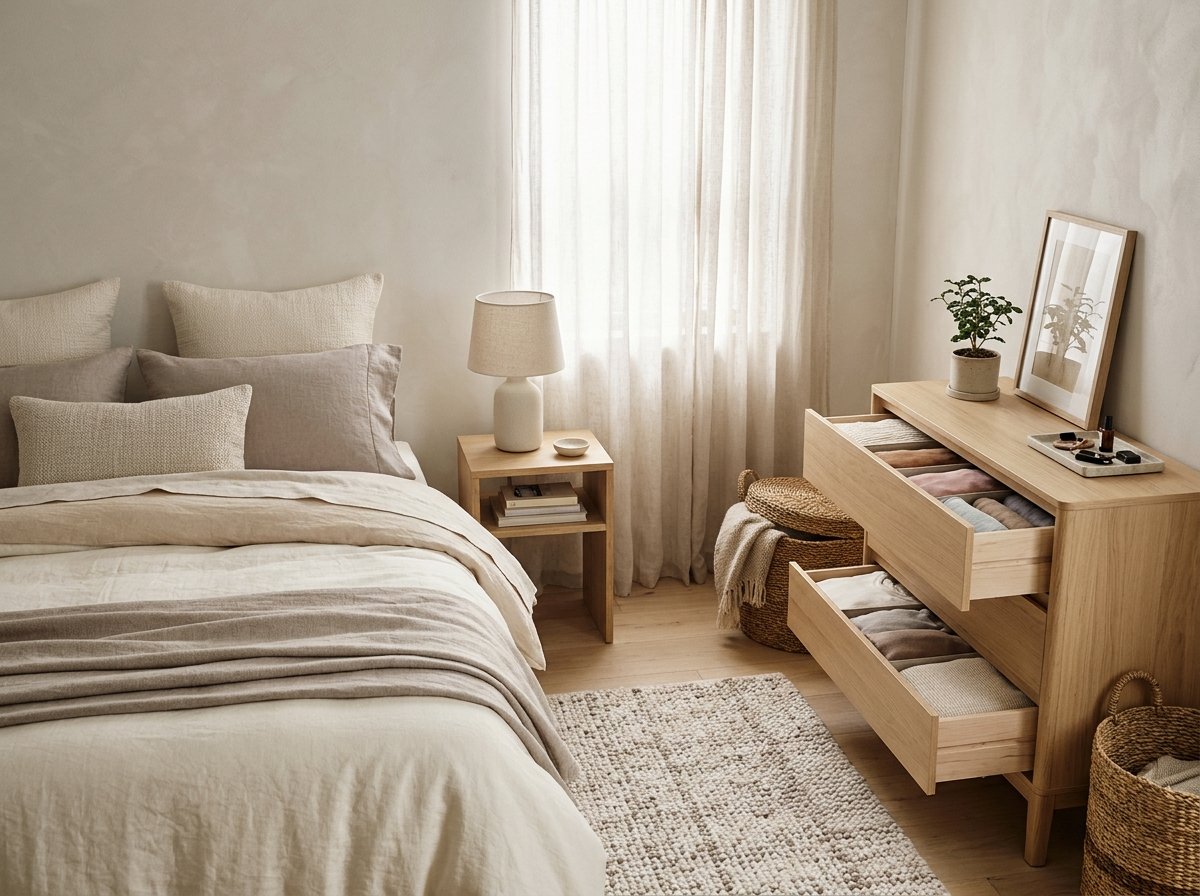
Start with the surfaces and areas that collect the most clutter: the bed, nightstand, dresser, chair, and floor. Return items that belong in other rooms, gather laundry, and remove packaging or rubbish.
Work one area at a time rather than emptying the entire bedroom at once. This makes the process manageable and helps you see which storage problems are caused by too many belongings and which need a better system.
1. Make the Bed and Floor Easy to Maintain
A clear bed and open floor can make a bedroom feel more restful immediately. Give blankets, extra pillows, and everyday clothing a proper place instead of letting them collect on chairs or at the foot of the bed.

If you need a temporary laundry spot, use a hamper rather than a floor pile. Keep walkways clear and avoid placing storage where it makes it difficult to open drawers or move around the room.
2. Organize Dresser Drawers by Category
Group similar clothing together, such as sleepwear, everyday tops, activewear, and undergarments. Fabric drawer organizers can keep smaller items separated, while consistent folding makes it easier to see what is available.

Avoid packing drawers so tightly that clothing becomes difficult to remove. If a drawer is overfilled, edit the category or move occasional-use pieces to another suitable storage area.
3. Use Vertical Space in the Closet
Closet shelves, hanging organizers, and hooks can provide additional places for clothing and accessories. Lidded storage bins can also keep seasonal or less frequently used belongings contained. Keep frequently worn items within easy reach and reserve higher shelves for lighter items.

Choose organizers that fit the closet’s dimensions and do not obstruct doors or existing hanging space. Keep heavier items low and avoid unstable overhead stacks.
4. Give the Nightstand a Simple Purpose
A bedside table with a charging station can keep nighttime essentials close at hand. A lamp, book, glasses, charger, or small tray may be enough for your routine.

Use a drawer organizer or small tray to contain little items, and move backup products or unrelated belongings elsewhere. Leaving some surface space open makes the nightstand easier to clean and less visually busy.
5. Make Under-Bed Storage Work for You
The space beneath the bed can hold seasonal clothing, spare linens, or other items you do not need every day. Under-bed storage containers with wheels can make tucked-away items easier to retrieve while helping protect them from dust. For shoes you do not wear every day, under-bed shoe organizers can keep pairs together and out of sight.

Measure the clearance beneath the bed, including any frame supports. Choose containers that slide smoothly and do not block ventilation or create a difficult-to-reach storage area.
6. Create a Home for Bags, Shoes, and Accessories
Handbags, shoes, belts, and jewelry can spread across a bedroom when they do not have assigned places. Use a shelf, divided drawer, shoe rack, or suitable hooks based on the item and the available space.

Keep everyday accessories close to the clothing you pair them with, and store delicate items in a way that protects their shape and finish. Avoid overcrowding hooks or shelves.
7. Use Baskets for Soft and Everyday Items
Baskets can hold extra blankets, decorative pillows, or other soft items that need a convenient home. A large woven storage basket can be useful beside a bed or chair, especially when the room has limited drawer space.

Choose a size that fits the space and a purpose that is easy to remember. A basket should contain a category, not become a place where unrelated clutter disappears.
8. Keep Laundry and Clean Clothes Separate
A collapsible laundry hamper gives worn clothing a defined place and helps prevent it from collecting on furniture. If you sort laundry, choose a divided hamper or separate baskets that fit your routine and the available floor space.

Create a simple path for clean clothes too: fold and put them away soon after laundry is finished, or use a designated temporary basket that is emptied regularly. This prevents clean and worn clothing from becoming mixed together.
9. Build a Short Evening Reset
Before bed, return a few items to their homes, place laundry in the hamper, clear the nightstand, and prepare anything needed for the next morning. A short routine can make the room feel more settled without requiring a major cleaning session.

Review storage every so often and adjust it as your needs change. A peaceful bedroom is not about keeping every surface empty; it is about making the space comfortable, functional, and easy to care for.
A More Organized Space, One Step at a Time
A more organized bedroom comes from simple systems that support rest and everyday routines. Give clothing, laundry, accessories, and bedside essentials clear homes, and choose storage that fits the room rather than crowding it. Start with one area and build habits that make the space easier to enjoy.
Affiliate Disclosure
This article may contain affiliate links. As an Amazon Associate, I earn from qualifying purchases. If you purchase through these links, I may earn a small commission at no additional cost to you. I only aim to share products and ideas that are relevant to the topic and useful to readers.